
ASHRAE 90.1-2019 vs. 90.1-2022: The Metering Requirements
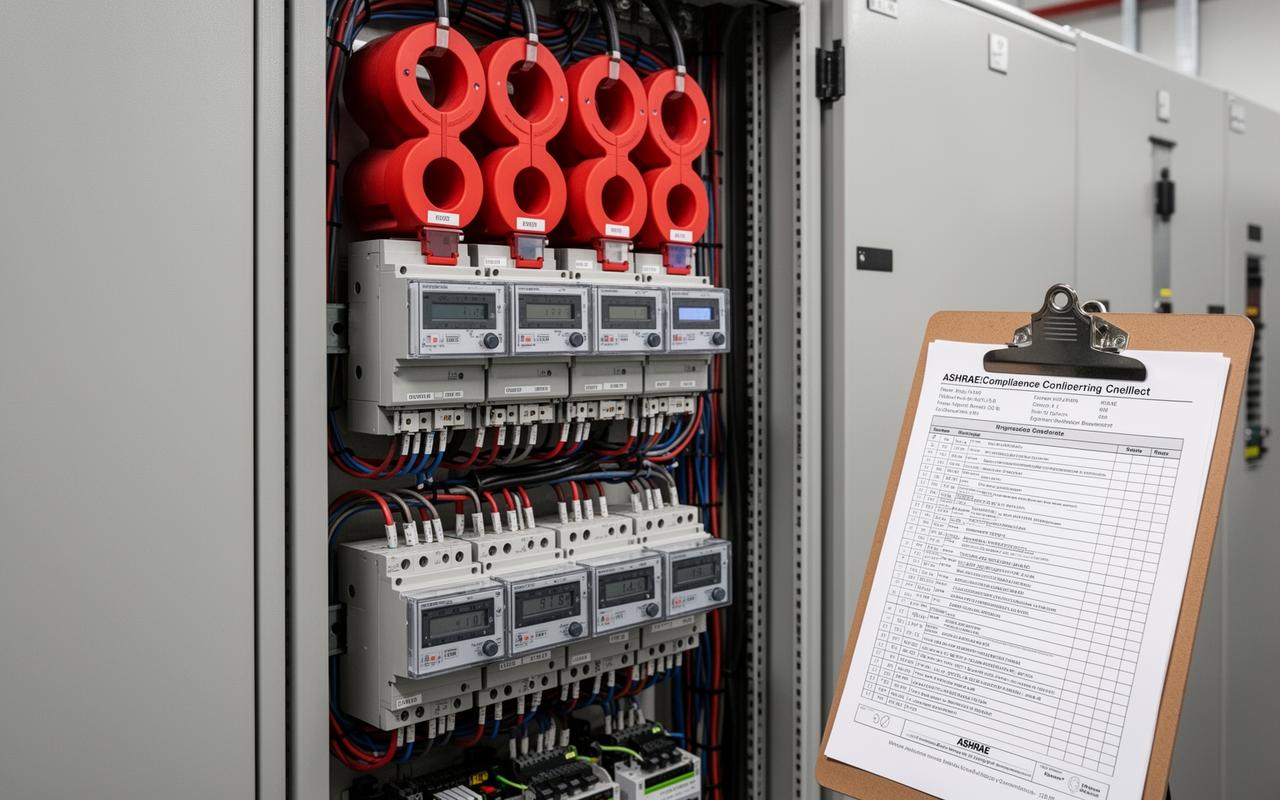
ASHRAE Standard 90.1 sets the foundation for US commercial building energy codes. The 2019 and 2022 editions brought major changes to [energy metering requirements. Understanding these updates is crucial for building professionals.
Background: ASHRAE 90.1 and Energy Metering
ASHRAE 90.1 has included energy metering rules since 2010. Early versions had modest requirements. Section 8.4.3 of the 2010 standard asked for meters per energy source. It also required limited submetering for some building types. The 2013 and 2016 editions saw small improvements. Significant changes began in 2019 and accelerated in 2022.
These updates are vital for architects, engineers, contractors, and owners. They must design and operate buildings to meet modern standards.
ASHRAE 90.1-2019 Metering Requirements
The 2019 edition of ASHRAE 90.1 introduced a full framework for energy metering](https://kwmetering.com/submetering). This was detailed in Section 8.4.3.
What is Whole-Building Metering?
All buildings needed meters for each energy type. This included electricity, gas, fuel oil, steam, chilled water, and hot water. Meters had to log consumption every hour or less. Data storage was required for at least 36 months.
What are the Electrical Submetering Requirements?
Buildings with over 250 kVA electrical capacity needed submeters for these uses:
- HVAC systems (fans, pumps, chillers, cooling towers)
- Interior lighting
- Exterior lighting
- Receptacle/plug loads
- Single tenants over 10,000 sq ft
This greatly expanded previous submetering rules.
What are the Thermal Submetering Requirements?
Buildings with central heating or cooling plants needed input metering. This included boilers, chillers, and heat pumps. Thermal distribution metering was a more limited requirement.
How was Data Recorded and Reported?
All meters had to record data hourly or less. Data needed storage for at least 36 months. The standard also required data access for analysis and reports.
ASHRAE 90.1-2022 Metering Requirements
The 2022 edition builds on the 2019 framework. It includes several key changes and additions.
How Did Submetering Thresholds Change?
The 2022 edition lowered the electrical service capacity for submetering. It moved from 250 kVA to 150 kVA. This greatly increases buildings needing electrical submetering. Thousands more commercial buildings now fall under this rule.
Were More End-Use Categories Added?
Yes, the 2022 standard added new submetering categories:
- Data center IT loads (if present)
- Electric vehicle charging (if present)
- Commercial kitchen equipment (over 50 kW total load)
- Vertical transport (elevators, escalators, over 25 kW total load)
- Renewable energy generation (if present)
These additions reflect modern building loads. They provide more detailed data for energy and carbon strategies.
Were Thermal Metering Requirements Enhanced?
The 2022 edition significantly expanded thermal metering. Buildings must now meter thermal energy output from central plants. This means Btu meters on chilled and hot water systems. This change helps measure plant efficiency.
Buildings with district energy need metering at the connection point. They also need it at major distribution branches.
Is Real-Time Data Access Required?
Yes, the 2022 edition requires real-time data. Metering data must be available to operators. A dashboard or EMIS should show it within 15 minutes. This differs from 2019's focus on recording and storage.
What is Fault Detection and Diagnostics?
The 2022 edition introduced automated fault detection and diagnostics (AFDD). Buildings over certain sizes must use AFDD systems. These systems use metering data to find faults. They notify building operators of issues.
AFDD can cut building energy use by 5-15%. It identifies and fixes problems that would otherwise go unnoticed.
Practical Implications
The shift from 2019 to 2022 affects building professionals.
What Does This Mean for the Design Phase?
Architects and engineers must add metering infrastructure early. This includes space for metering panels and data gear. Conduit, wiring, and network pathways are also needed. Integration with building automation systems is key.
What Does This Mean for the Construction Phase?
Contractors must install metering equipment during construction. They need to coordinate with electrical and mechanical trades. Current transformers must be sized and installed correctly. Data communication pathways must be functional.
What Does This Mean for Commissioning?
Metering systems need commissioning. This is part of the overall building commissioning. It involves checking meter accuracy and calibration. Data recording and transmission must be confirmed. Dashboard displays and AFDD capabilities also need testing.
What Does This Mean for Operations?
Building operators need training. They must use metering data effectively. This includes understanding dashboards and AFDD alerts. They should use data for ongoing optimization. Metering equipment and data systems also need maintenance.
Cost Considerations
Expanded ASHRAE 90.1-2022 metering rules increase building costs. However, the investment often pays for itself.
- Comprehensive metering costs about $0.25-0.75 per square foot.
- Operational savings range from $0.50-1.50 per square foot annually.
For a 100,000 sq ft office, initial cost is $25,000-75,000. Annual savings are $50,000-150,000. This often leads to a payback of less than two years.
Compliance Strategies
Building owners and professionals should consider these strategies.
- Start early: Integrate metering into early design. Retrofitting is costly.
- Choose integrated platforms: Select hardware and software that supports current and future needs. Integrated metering, BAS, and analytics offer the most value.
- Plan for thermal metering: Expanded thermal metering can be challenging. Plan early for Btu meter locations and pipe changes.
- Leverage AFDD: Use AFDD as an opportunity, not just a rule. AFDD systems find savings that offset their cost.
- Document everything: Keep detailed records of metering design, install, and operation. This is vital for code compliance and management.
Looking Forward
Metering requirements will continue to grow. Future ASHRAE 90.1 editions will expand submetering. They will also add more data analysis and reporting rules.
Professionals who understand these rules will succeed. They will deliver high-performing, compliant buildings. This provides long-term value to owners and occupants.
Emergent Metering is your partner for ASHRAE 90.1 metering. We offer expertise in technical and regulatory aspects. We help design, implement, and operate systems that meet the latest standards.
Practical Implications for Building Owners and Engineers
The changes from ASHRAE 90.1-2019 to 2022 impact building design and operation.
For owners, plan metering infrastructure early. Installing meters during construction is cheaper than retrofitting. Data provides operational value from day one.
Engineers must design systems that meet code. They must be practical and maintainable. 15-minute interval data, load segregation, and BAS integration need careful coordination. Electrical, mechanical, and controls teams must work together.
Facility managers need to understand existing metering. This helps leverage data effectively. A 90.1-2022 building should have meters on HVAC, lighting, and process loads. This assumes proper commissioning and BAS integration.
Code-minimum metering provides basic monitoring. Deeper savings come from circuit-level monitoring. This goes beyond code minimums.
Adding wireless circuit-level sensors typically costs $10,000–$25,000. This delivers 3–5x more actionable data than code-minimum installations.
The trend for metering is clear. Each code revision demands more granular data. It requires more accessible data and advanced analysis. proactive owners and engineers will save money. They will also capture operational savings sooner. This positions buildings for compliance with future codes.
Related Articles
Green Building United 2026 Sustainability Symposium: What to Expect After a Landmark 2025 Event
Mar 14, 2026 · 8 min read read
Energy Code Compliance Is Coming for Your Building — Are You Ready?
Mar 10, 2026 · 8 min read read
LCFS EV Charging Credits in 2026: How Metering Unlocks Maximum Credit Revenue
Mar 5, 2026 · 10 min read
About Emergent Metering Solutions
Emergent Metering Solutions provides commercial and industrial metering hardware, installation support, and energy analytics services. We specialize in electric meters, water meters, BTU meters, compressed air meters, gas meters, and steam meters with Modbus RTU, BACnet IP, pulse output, and wireless communication options. Our Managed Intelligence services deliver automated reporting, anomaly detection, tenant billing, and AI-powered consumption forecasting. We support compliance with IECC 2021, ASHRAE 90.1-2022, NYC Local Law 97, Boston BERDO 2.0, DC BEPS, California LCFS, and EU CSRD requirements.
Contact our engineering team for meter selection guidance, system design, and project quotes.