
AI-Powered Predictive Maintenance: How Energy Monitoring Data Is Preventing Equipment Failures Before They Happen
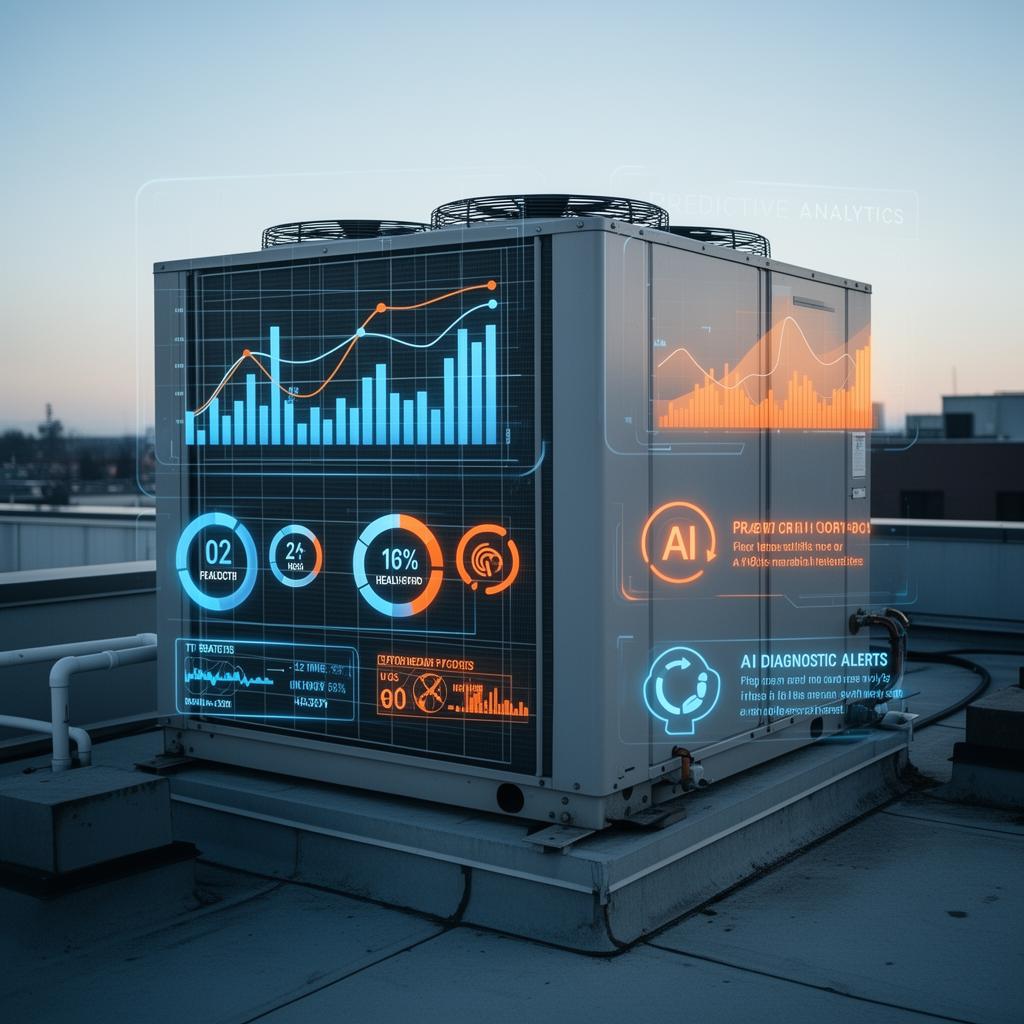
AI-Powered Predictive Maintenance: How Energy Monitoring Data Prevents Equipment Failures
AI-powered predictive maintenance uses energy monitoring data to prevent equipment failures. It analyzes energy patterns to detect impending issues before they cause costly breakdowns. This approach saves money and extends equipment life.
The Problem: Unexpected Equipment Failures
Facility managers often face unexpected equipment failures. A broken HVAC unit at 2 AM on a Saturday is a common scenario. This leads to angry tenants and expensive emergency repairs.
Reactive maintenance is very costly. It can be 3–5 times more expensive than planned maintenance. This includes emergency labor, rush parts, and business disruptions.
Preventive maintenance helps, but it has flaws. It involves servicing equipment on a schedule, regardless of its actual condition. A new compressor gets the same attention as an old one.
Predictive maintenance is better. It services equipment based on its actual condition. Now, affordable circuit-level energy monitoring and AI make it practical.
Energy Data as a Diagnostic Tool
Energy data provides crucial diagnostic signals. Every electrical device has a unique energy signature when working normally. This signature changes predictably as the equipment degrades.
Current Draw Patterns
Healthy equipment shows specific current draw patterns. A compressor, for instance, has a characteristic inrush spike at startup. Its steady-state current draw is also specific.
These patterns change as equipment wears. Worn bearings or low refrigerant alter current draw. The compressor might draw more current or cycle irregularly.
These changes are often subtle at first. A 5–10% increase in current draw is hard to spot on a utility bill. Circuit-level energy monitoring captures this data. It records at 1-minute or sub-minute intervals. This shows clear degradation trends over time.
Cycling Behavior
Equipment cycling patterns offer another diagnostic signal. An HVAC system should cycle on and off predictably. Short-cycling means rapid on-off sequences.
Short-cycling indicates various issues. These include oversized equipment or low refrigerant. It could also mean restricted airflow or a bad expansion valve.
A compressor cycling 40% more often signals a problem. Circuit-level energy monitoring makes this signal visible. Without it, the problem remains hidden until failure.
Power Quality Signatures
Advanced energy monitors capture more than current and voltage. They record power factor, harmonics, and other quality parameters. These provide extra diagnostic value.
A motor with winding insulation failure shows power factor and harmonic changes. This happens before current draw changes significantly. Voltage imbalance can also indicate issues. It points to loose connections or utility problems. These issues accelerate equipment wear.
How AI Makes Actionable Predictions
Collecting circuit-level energy data is the first step. AI-powered analytics translate this data into action. Machine learning algorithms analyze thousands of data points. They identify anomalies a human might miss.
Baseline Learning
AI platforms first establish a baseline for each equipment piece. This baseline accounts for normal variations. For example, a rooftop unit uses more current on a hot day. The AI learns these correlations.
It links energy use with external factors. These include weather, occupancy, and time of day. This creates a dynamic baseline for "normal" operation.
Anomaly Detection
Once a baseline exists, AI compares real-time data to it. Deviations are scored based on:
- Magnitude
- Persistence
- Pattern
A quick current spike during a storm is normal. A gradual 2% weekly current increase for a month is not. This, plus increased cycling, indicates degradation.
AI surpasses simple threshold alerts. Fixed thresholds often cause false positives. They don't account for normal equipment variability. AI models filter out normal variations. They only highlight genuine anomalies.
Failure Mode Classification
Advanced predictive maintenance platforms classify failure modes. They go beyond simple anomaly detection. The AI suggests probable causes based on deviation patterns.
It looks at:
- Which parameters are changing
- How fast they change
- Their combination
This transforms maintenance work orders. Instead of "anomaly detected," it becomes "probable refrigerant leak." The AI guides specific actions.
The Hardware Foundation for Energy Monitoring
AI-powered predictive maintenance needs good data. The monitoring hardware must capture enough details.
Circuit-Level Monitoring
The [Accuenergy AcuRev 2100 series provides the data. These meters capture current, voltage, power, and power factor. They also record harmonics on individual circuits. Data can be recorded as often as every 1 second. For predictive maintenance, 1-minute data is usually enough. This balances detail with storage needs.
Data Aggregation
The Obvius AcquiSuite aggregates data on-site. It collects data from multiple Accuenergy meters via Modbus. Then, it sends this data to cloud platforms. It uses standard protocols like MQTT and REST API. One facility can monitor dozens of circuits this way. Each meter does not need its own network connection.
Wireless Sensors for Quick Deployment
Panoramic Power wireless sensors offer quick deployment. They provide circuit-level current monitoring. They are self-powered and transmit data wirelessly. While they capture fewer parameters than hardwired meters, current data handles many use cases.
ROI: The Numbers That Matter
AI-powered predictive maintenance delivers clear financial benefits. These come from three main areas.
Fewer Emergency Repairs
Emergency repairs cost 3–5 times more than planned ones. For a facility with 20 pieces of equipment, preventing 3–4 failures saves $30,000–$50,000 yearly. These savings add up quickly across multiple locations.
Longer Equipment Life
Equipment maintained based on its condition lasts longer. Catching a refrigerant leak early prevents compressor damage. This extends the unit's life by years. Condition-based maintenance can extend equipment life by 15–25%. This defers capital replacement costs.
Less Energy Waste
Degrading equipment uses more energy. A compressor with a leak uses 10–20% more energy before it fails. Predictive maintenance catches this degradation early. This reduces periods of high energy use. For facilities with high energy consumption, this benefit is significant.
Combined Impact
Consider a facility spending:
- $200,000/year on energy
- $150,000/year on maintenance
A well-implemented predictive maintenance program typically offers:
- 20–30% reduction in unplanned maintenance events: $15,000–$22,500/year
- 5–10% energy savings from early detection: $10,000–$20,000/year
- 15–25% equipment life extension: $20,000–$40,000/year in deferred capital
Total annual value ranges from $45,000 to $82,500. The monitoring system usually pays for itself within the first year.
Getting Started
Emergent Metering Solutions provides complete hardware for AI-powered predictive maintenance. This includes Accuenergy circuit-level meters and Obvius data aggregators. We also offer Panoramic Power wireless sensors for fast deployment.
Our team helps design monitoring architecture. We ensure you capture the right data. We match it to your equipment and maintenance goals.
Contact our engineering team to discuss your predictive maintenance goals. Or, explore our metering products](https://www.kwmetering.com/accuenergy-acurev-2100-series/) to learn about the hardware.
Ready to take the next step?
Let Emergent Energy show you what circuit-level monitoring can do for your facility.
Related Articles
Green Building United 2026 Sustainability Symposium: What to Expect After a Landmark 2025 Event
Mar 14, 2026 · 8 min read read
Energy Code Compliance Is Coming for Your Building — Are You Ready?
Mar 10, 2026 · 8 min read read
LCFS EV Charging Credits in 2026: How Metering Unlocks Maximum Credit Revenue
Mar 5, 2026 · 10 min read
About Emergent Metering Solutions
Emergent Metering Solutions provides commercial and industrial metering hardware, installation support, and energy analytics services. We specialize in electric meters, water meters, BTU meters, compressed air meters, gas meters, and steam meters with Modbus RTU, BACnet IP, pulse output, and wireless communication options. Our Managed Intelligence services deliver automated reporting, anomaly detection, tenant billing, and AI-powered consumption forecasting. We support compliance with IECC 2021, ASHRAE 90.1-2022, NYC Local Law 97, Boston BERDO 2.0, DC BEPS, California LCFS, and EU CSRD requirements.
Contact our engineering team for meter selection guidance, system design, and project quotes.